




GENERAL INFORMATION
Grant Approval Date
End (estimated) Date
Project Cost
433,730.50
Sector
Executing Agency
African Technology Policy Studies Network
Current status
Closed

Background
The twelve Sub-Saharan African countries included in this study are parties to the UNFCCC and the Paris Agreement. Despite their long-standing participation in global climate negotiations, progress in implementing and reporting on Nationally Determined Contributions (NDCs) remains limited. Challenges such as reliance on secondary data, lack of technical capacity, financial constraints, and the complexity of cross-sectoral implementation have hindered effective NDC delivery. Inadequate funding and technical support further constrain Africa’s transition toward a low-carbon and climate-resilient pathway.
To address these gaps, the African Technology Policy Studies Network (ATPS) and its partners developed an NDC Implementation Monitoring and Tracking Tool and Index in 2019. This framework assesses NDC progress across five key components: Governance, Finance, Mitigation, Adaptation, and Measurement, Reporting and Verification (MRV), highlighting strengths, weaknesses, and opportunities for policy improvement.
Building on the successful pilot in eight African countries, this project aims to strengthen the capacity of focal persons in twelve Sub-Saharan African countries to effectively measure NDC implementation progress using the validated tracking tools and index.
Objectives
The project aims to build the capacity of 72 Focal Persons and Climate Champions in 12 sub-Saharan African countries to effectively measure their NDC’s implementation progress using tracking tools and indexes.
Main Components/Outputs
- Improved capacity of focal persons/champions to collect and utilise NDC data
- Increased use of indexes for decision-making in emissions reduction at the country level
- Increased ownership of the NDC tools for continuous data collection and decision-making
- Regional buy-in and strategic support for the use of NDC indexes
Key Achievements or Progress
Strengthened institutional and technical capacity for NDC tracking
The project has strengthened the capacity of sub-Saharan African countries to measure and track progress in implementing Nationally Determined Contributions (NDCs), thereby contributing to improved compliance with the Paris Agreement. By the end of 2025, a total of 72 focal persons and climate champions across 12 countries were equipped with the technical skills and tools required to apply NDC tracking methodologies and indices. This capacity development has enhanced the ability of national institutions to generate, analyse, and utilise climate data for monitoring emissions reduction efforts. As a result, countries are increasingly able to assess progress against their climate commitments with greater precision and consistency.
Increased use of evidence-based tools for climate decision-making
The project has advanced the adoption of the NDC Implementation Index as a practical decision-support tool for emissions reduction planning. Through targeted sensitisation efforts, 356 stakeholders, including 38% women, were engaged on the application and value of the Index. This has strengthened understanding of its relevance and encouraged countries to provide the data required for its operationalisation.
The introduction and use of the Index are contributing to more structured, transparent, and data-driven decision-making processes, supporting improved prioritisation of climate actions at the national level.
Enhanced ownership and sustainability of NDC tracking systems
Institutional ownership of NDC tracking tools has been significantly strengthened through the development and launch of an online platform hosting the NDC Implementation Index and its periodic updates in 2025. The platform is ensuring sustained access to data and analytical tools, while promoting continuous monitoring and evidence-based policy decisions across participating countries. Since its launch, the platform has recorded an average of approximately 1,000 visits per month, reflecting growing utilisation and relevance.
In parallel, the project secured strong political, ministerial, and technical endorsement for the Index, reinforcing its credibility as a tool for tracking climate commitments. These endorsements are supporting its institutionalisation within national systems and enhancing accountability and transparency in climate governance.
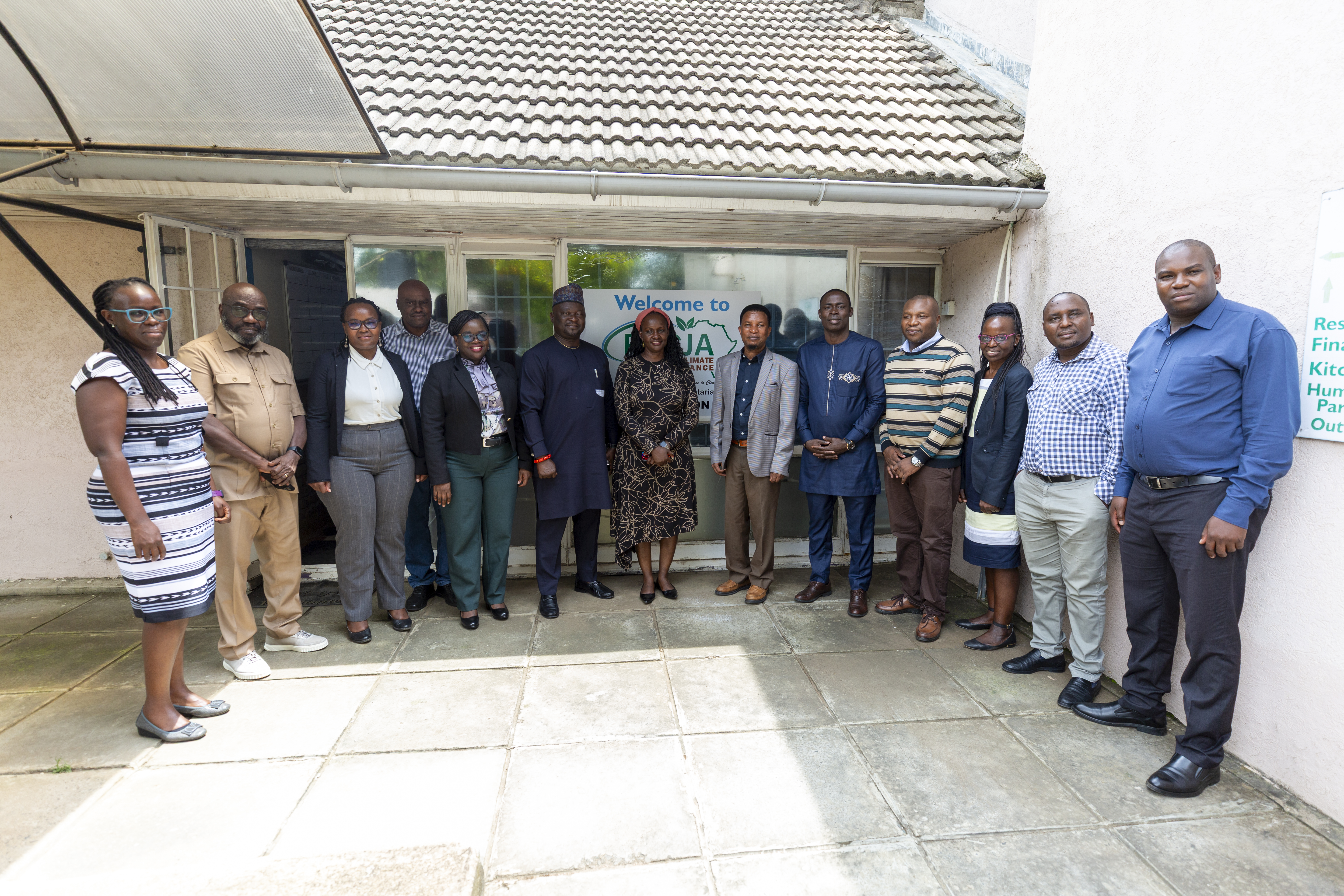
Engagement with beneficiaries during a field monitoring mission in Kenya further confirmed the practical relevance of the tools, with climate champions and data practitioners highlighting their utility in strengthening national reporting processes.
Overall results
The project has successfully established a durable and scalable system for tracking NDC implementation across 12 sub-Saharan African countries. Through strengthened institutional capacity, the operationalisation of the NDC Implementation Index, and strong regional endorsement, the initiative has improved the measurability, transparency, and coherence of climate action. These achievements provide a solid foundation for sustained monitoring and enhanced compliance with international climate commitments.
More images about the project

More videos about the project
More documents about the project