




Donors





New contribution
ACCF welcomes contributions from a wide range of stakeholders including any from State eligible to become a member of the Bank and any entity acceptable to the Bank. In order for a new donor to make a contribution, it needs to accede to the multi-donor arrangement which governs how the contributions to the Fund will be managed and allocated. This can be done through an official letter from the new donor to the Bank, indicating its agreement with the terms of the multi-donor arrangement, and the contribution it wishes to make. The new donor will then nominate a representative to the Oversight Committee of the Fund.
Partners
Le FCCA collabore avec différentes entités dans le cadre de ses activités conjointes. Parmi ses partenaires actuels et précédents, figurent notamment :
The African Water Facility (AWF) is an initiative of the African Ministers’ Council on Water (AMCOW) managed by the African Development Bank (AfDB), established in 2004 as a Special Water Fund to help African countries achieve the objectives of the Africa Water Vision 2025 and the Sustainable Development Goals (SDG).
The Global Water Partnership (GWP) is a global action network with over 3,000 Partner organisations in 179 countries. The network has 68 accredited Country Water Partnerships and 13 Regional Water Partnerships.
The Geneva Center for Security and Peace (GCSP) is an international foundation and a leading executive education center on security policy based in the heart of international Geneva. More than 53-member states belong to its foundation council. The Centre has 25 years of experience (25th anniversary celebration this year) delivering innovative and dynamic executive courses for Swiss and international decision-makers.
Useful Links
The Green Climate Fund (GCF) was adopted by 194 governments as a financial mechanism of the United Nations Framework Convention on Climate Change at the end of 2011. It aims to make an ambitious contribution to attaining the mitigation and adaptation goals of the international community with the goal of keeping the temperature increase of the planet below 2 degrees Celsius. Over time it is expected to become the main multilateral financing mechanism to support climate action in developing countries.

The Global Environment Facility (GEF) was established in October 1991 to provide grants and concessional funding to cover costs associated with transforming a project with national benefits into one with global environmental benefits. The GEF unites 183 member governments in partnership with international institutions, non-governmental organizations and the private sector. The African Development Bank joined the GEF in 2007 as an Implementing Agency, with direct access to GEF resources.
The $8 billion Climate Investment Funds (CIF) accelerates climate action by empowering transformations in clean technology, energy access, climate resilience, and sustainable forests in developing and middle income countries. The CIF’s large-scale, low-cost, long-term financing lowers the risk and cost of climate financing. The African Development Bank serves as an implementing agency of the Climate Investment Funds (CIF), a premier multilateral climate finance mechanism at the forefront of climate action in developing countries.
The Adaptation Benefit Mechanism (ABM) is an innovative mechanism for mobilizing new and additional public and private sector finance for enhanced climate change adaptation action. It has the potential to speed up transformation to low-carbon, resilient and sustainable development of the host countries by giving value to resilience. The ABM is an integral component of the Innovative Financial Instruments Pillar of the Africa Adaptation Acceleration Program. The ABM is one of the mechanisms for financing adaptation projects and programs created under the other pillars of the AAAP.

The African Financial Alliance on Climate Change (AFAC) aims to put the financial sector at the centre of climate action in Africa. The pan-African alliance brings together Africa’s key financial institutions, including central banks, insurance companies, sovereign wealth and pension funds, stock exchanges, as well as commercial and development banks, to mobilise private capital flows towards continent-wide low-carbon and climate resilient development.
The AfDB’s Climate Change and Green Growth Department (PECG) has established the Africa Nationally Determined Contributions (NDCs) Hub to serve as a resource pool for Regional Member Countries (RMCs), and to coordinate various sector activities with a view to fulfilling obligations related to the Paris Agreement. Africa NDC Hub is a platform where partner institutions (currently 21) coordinate their climate change interventions to support African countries in the effective delivery of their Paris Agreement commitments
The ClimDev-Africa Special Fund (CDSF) is a demand-led Fund that pools resources to finance investment activities on the ground across Africa for the generation and use of climate information for climate-resilient development. The CDSF became operational in August 2014 as a multi-donor trust fund established to support African countries, institutions and communities build resilience to the impacts of climate change.
The Sustainable Energy Fund for Africa (SEFA) was established in 2011 at the African Development Bank with Denmark’s commitment of US$56 million to allow the Bank to scale-up its engagement in the small to medium-sized renewable energy and energy efficiency space. In 2013, SEFA was transformed into a multi-donor facility with an initial US$5 million commitment from the United States as part of a multi-year engagement under President Obama’s Power Africa Initiative and, more recently, the United Kingdom joined SEFA with 15 million GBP and Italy with 7.4 million EUR.
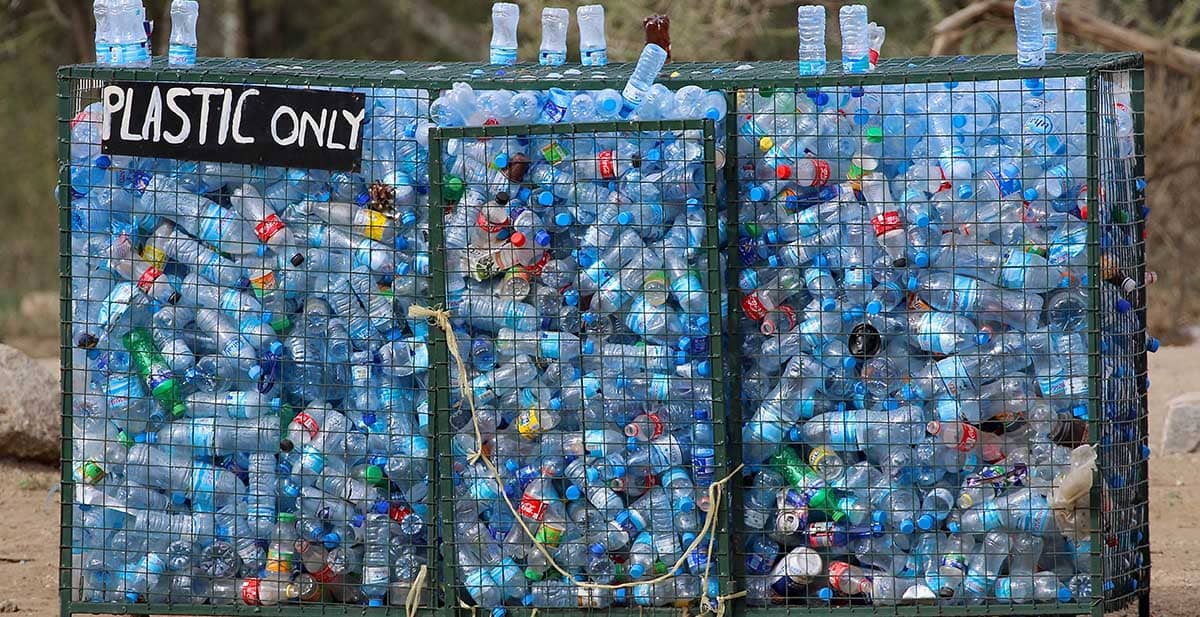
The Africa Circular Economy Facility (ACEF) is a multi-donor grants trust fund hosted by the Climate Change and Green Growth Department of the African Development Bank. Its objective is mainstreaming the circular economy as an inclusive green growth strategy to help African nations fulfil their development priorities while meeting the goals of the Paris Agreement, Sustainable Development Goals (SDGs) and the African Union’s Agenda 2063. ACEF is the only multi-donor trust fund dedicated to mainstreaming the circular economy model in Africa.

The Africa Adaptation Acceleration Program (AAAP) is a joint initiative of the African Development Bank and the Global Center on Adaptation (GCA). It aims to mobilize $25 billion, over five years, to accelerate and scale climate adaptation action across the continent. The AAAP was endorsed at the Leaders' Dialogue on the Africa Covid-Climate Emergency in April 2021. This was the largest gathering ever of African Heads of State and Government solely focused on adaptation.
The Canada – African Development Bank Climate Fund (CACF) is a Special Fund established in 2021 and structured as a blended climate change facility including an Investment Facility aimed at extending concessional loans to eligible climate change projects plus a Technical Assistance Facility that seeks to address the increased complexity, coordination requirements and reporting obligations related to climate change projects. The objective of CACF is to extend large-scale, long-term concessional loans to climate mitigation and adaptation projects that embed gender equality principles throughout the various phases of the project cycle, particularly the empowerment of women and girls.