




GENERAL INFORMATION
Grant Approval Date
End (estimated) Date
Project Cost
$996,700 by ACCF and $360,000 by the Private sector
Sector
Executing Agency
Global Shea Alliance
Current status
Ongoing

Background
Shea trees grow naturally on 28 million hectares in traditional farming systems in Burkina Faso and Togo. The trees are integrated with crops on smallholder farms, creating an agroforestry landscape resilient to climate change. Indeed, every year, shea parklands in West Africa capture more than 1.5 million tons of CO₂. However, this ecosystem, which is key for climate change mitigation, is at risk. It is estimated that about 8 million trees are lost every year in West Africa due to the loss of fallows, lack of regeneration, commercial agriculture, and tree removal for charcoal purposes.
In 2023, the Global Shea Alliance (GSA) signed an agreement worth USD 996,700 with the African Development Bank’s (AfDB) Africa Climate Change Fund to deliver a two-year project entitled “Towards Climate Resilient Shea Communities in Togo and Burkina Faso.” The GSA brings an additional USD 360,900 in co-financing to the project. This project will reduce the climate vulnerability of 7,500 women shea collectors and their communities (more than 30,000 people) in Togo and Burkina Faso by increasing income generated from activities like shea and apiculture and improving community-led parkland management practices.
Objectives
To increase the climate resilience of 7,500 women shea collectors and their communities (30,000 people overall) in Togo and Burkina Faso through increased income from natural products (shea and apiculture) as well as introduction of community-led parkland management practices.
Main Components/Outputs
- Technical assistance provided on climate smart processing practices and energy sources to cooperative members and by-laws committee members
- Conservation equipment provided to female cooperative members
- Technical assistance on business management provided to female cooperative members
- Storage equipment provided to female cooperative members
- Technical assistance provided on parkland restoration to female cooperative members
- Equipment provided to restore shea parklands to female cooperative members
- Technical assistance provided on development and implementation of parkland by-laws to community members
Key Achievements or Progress
Economic resilience – increased climate-resilient livelihoods for women producers
The construction of 15 warehouses, along with improved cookstoves and processing tools, has helped transform traditional shea gathering into a stronger economic activity for women’s cooperatives. Combined with business and cooperative management training for 7,867 women, this support improved product quality, strengthened market access, and increased profit margins, allowing more value to remain within the community.
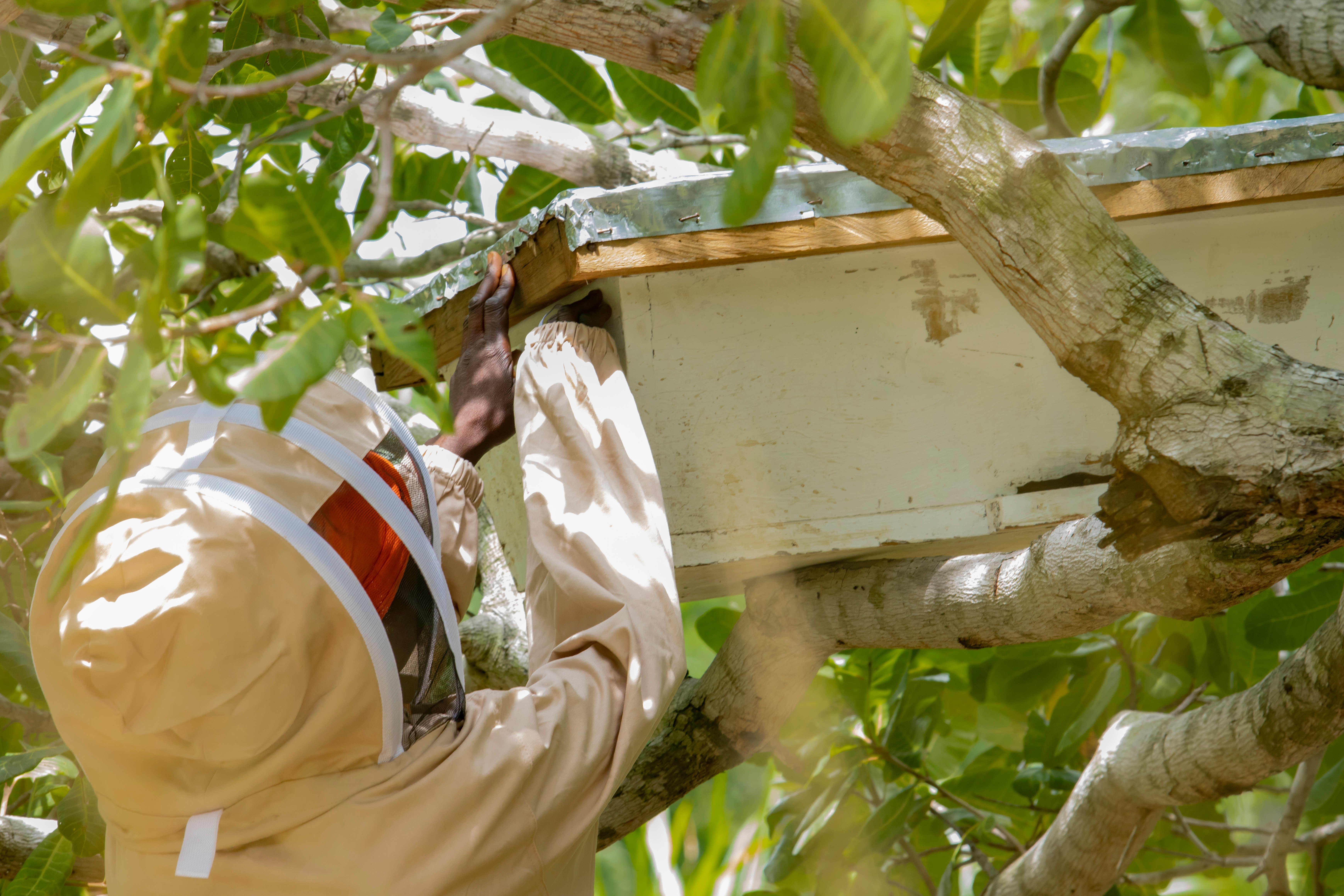
To reduce climate-related risks, the project also introduced beekeeping as an additional income-generating activity by training 15 cooperatives in apiculture and providing modern equipment. This created a more resilient livelihood model through honey and wax production while supporting the natural pollination of shea trees. In 2025, 11 cooperatives, representing around 5,500 beneficiaries, generated XOF 53,082,700 (approximately USD 96,514) from shea kernel sales, with 62% of profits reinvested into activities such as beekeeping and soap production.
Climate resilience – improved climate adaptation knowledge and sustainable practices
Building climate resilience within these communities begins with the large-scale restoration of the shea landscape. By training 15 cooperatives and 7,359 women in parkland management and Farmer Managed Natural Regeneration (FMNR), the project transformed traditional harvesters into active environmental stewards. The distribution of 12,180 seedlings, supported by community-wide awareness sessions on tree planting, aimed to directly reverse land degradation and boost biodiversity. These collective efforts ensure that the shea parklands remain a robust and productive natural barrier against the encroaching desertification affecting Togo and Burkina Faso.
To complement these reforestation efforts, the project has modernized the production cycle through climate-smart processing practices. By training 7,659 beneficiaries in eco-friendly processing and providing 300 improved cookstoves as essential conservation equipment, the project reduced the cooperatives’ reliance on local wood fuel. This shift to cleaner energy sources not only lowers carbon emissions but also alleviates the immense pressure on surrounding forests.
62% of beneficiaries progressed from limited awareness to confident understanding of climate adaptation practices, while cooperatives adopted sustainable processing methods that reduce pressure on shea parklands. By integrating sustainable land management with energy-efficient technology, these cooperatives are building a comprehensive defense against climate-related shocks while securing their long-term economic future.
Natural resource governance – enhanced women’s participation
The establishment of 14 local bylaws strengthened natural resource governance by placing shea cooperatives at the centre of decision-making. To ensure meaningful participation, 75 women, representing 38–42% of parkland management committees, were integrated into local governance structures, helping ensure that the protection and sustainable use of shea parklands are led by those whose livelihoods depend on them most.
Through targeted capacity building, women also strengthened their leadership skills and actively contributed to tree pruning, fire protection, regeneration practices, and the enforcement of local bylaws for sustainable parkland management. These efforts were supported by advocacy and awareness sessions with local authorities to address cultural barriers limiting women’s economic roles and land rights, creating a more inclusive and sustainable governance model.
Overall results
The project is strengthening climate resilience by linking women’s economic empowerment with ecosystem restoration. Increased income from shea and related enterprises is incentivizing conservation, while improved parkland management practices are stabilizing production and reinforcing long-term community resilience.
More images about the project

More videos about the project
More documents about the project